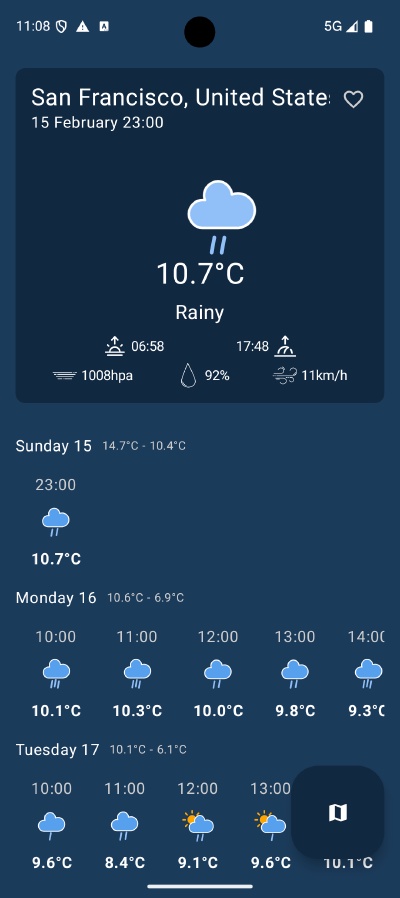
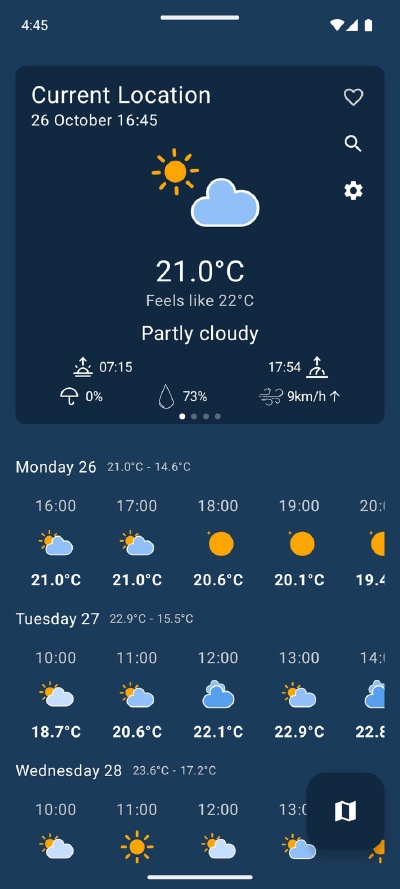
Weekly Weather 3 gave the app a radar map. 4.0 is the biggest update it has had: the weather card became four pages you swipe through, from the weather now to tonight’s sky, and the map got a rain forecast, labels for every city and a layer for dark skies. It went to Google Play today.
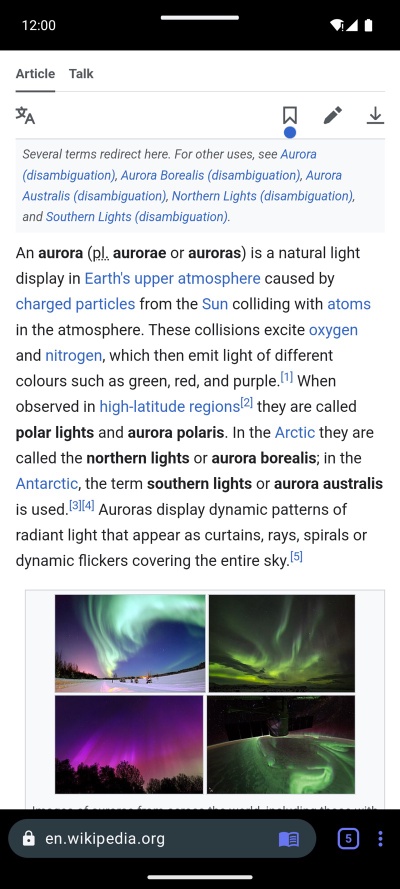
sBrowser started life as a teaching app for a workshop at 091 Labs: a WebView, an address bar and a few buttons. It grew bookmarks, an ad blocker and a video player over the years, was rewritten in Kotlin and Jetpack Compose in January 2024 (3.x), and 4.4 shipped in March this year. When Google Play’s new rule to target Android 16 (API 36) came due, I sat down to bump a number and ended up rebuilding most of it. sBrowser 5.0 went to Google Play for review today.
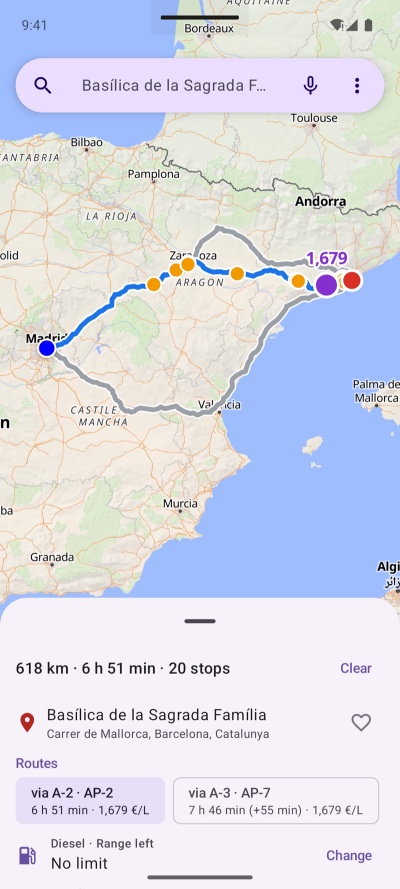
Years ago I found out that the Spanish Ministry publishes the price of every petrol station in the country as open data, updated live. I started an app around it, got as far as a list of stations, and left it in a folder. This month I picked it up again with a better question: not “where is fuel cheap?” but “where along the way I’m already driving does it actually pay to stop?” The result is Gas On Route, now waiting for review on Google Play.
If you maintain shared libraries across multiple Android or Kotlin Multiplatform projects, you’ve probably considered publishing them to a Maven repository. Maven Central works, but the publishing process is heavy — GPG signing, Sonatype staging, approval delays. For private or small-scale libraries, that’s overkill. If you already self-host a Git server like Gitea or Gogs, you can use it as a Maven repository with zero additional infrastructure.
Umami is a great privacy-focused, self-hosted alternative to Google Analytics. But its documentation assumes you’re tracking a website. If you want to use it in a mobile app, the docs point you toward embedding a WebView — which is clunky, adds overhead, and feels wrong for native apps. There’s a better way: hit the Umami API directly.
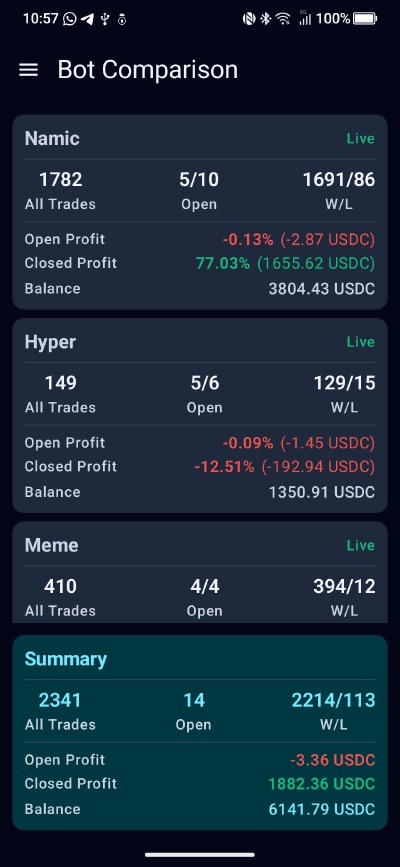
FreqDroid 1.2 is out with two notification upgrades: a new in-app notification history screen and support for rich exit notifications via FreqTrade’s strategy callback — giving you Telegram-style trade alerts without Telegram.
Version 3 of Weekly Weather is out, and it’s a significant update. The headline addition is an interactive radar map with animated precipitation overlays, but there’s a lot more packed into this release.